


It’s 11 pm. Your toddler has finally fallen asleep. Then your neighbour starts drilling a shelf into the wall you share.
If you’ve lived in an apartment, you know this moment. And it’s exactly why so many buyers now ask the same question when they shortlist gated villas in Bangalore: should I choose an independent villa vs row villa?
Both are called “villas” in brochures. But living in them can feel completely different. This guide explains what each one really is, what “no shared walls” means for your daily life, and how to pick the right one.
Quick Answer: An independent villa stands alone on its own plot with open space on all sides and no shared walls. A row villa shares one or both side walls with neighbouring homes. Independent villas often cost more and offer greater privacy and more scope for light and ventilation; resale depends on the project and market.
Key Takeaways
- An independent villa has no shared walls; a row villa shares one or two walls with neighbours.
- Shared walls affect noise, natural light, cross-ventilation and your freedom to renovate.
- Independent villas usually cost more because you get more land around your home.
- Not every “villa” in a brochure is independent, so always check the site layout before you book.
- For families living with parents or planning to stay long-term, independent villas usually offer better value over time.
What Is an Independent Villa?
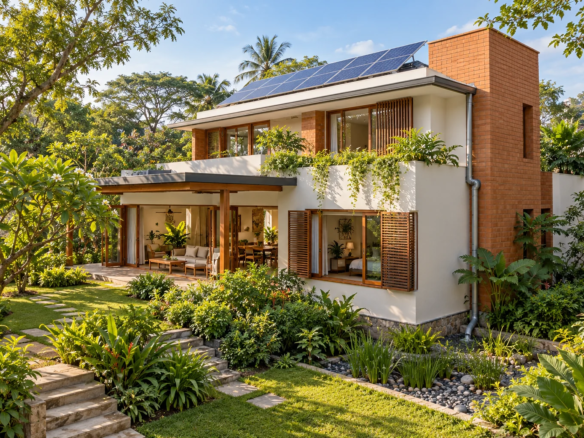
An independent villa is a standalone house built on its own plot of land, with open space on every side. No part of your home touches a neighbour’s home.
In a gated community, you still share the roads, clubhouse and security. But your house itself is entirely yours, from the foundation to the roof.
You may also see it called a detached villa or an independent house. If you’re searching for a 4 BHK independent house for sale, this is the type of home you’re looking for.
What Is a Row Villa?
A row villa (also called a row house or townhouse) is one of several homes built side by side in a continuous line. Each home shares one or both side walls with the next.
Corner units in a row share only one wall. Middle units share two. Row villas use land more efficiently, which keeps prices lower.
There’s also a middle option: the twin villa or semi-detached villa, where two homes share a single wall and stand apart from everything else.
Here’s an easy way to picture it. An independent villa is like a single chair with space all around it. A row villa is a seat on a bench: comfortable, but you always know someone is right beside you.
Independent Villa vs Row Villa: Side-by-Side Comparison
| Factor | Independent villa | Row villa |
|---|---|---|
| Shared walls | None | One (corner) or two (middle) |
| Privacy | Greater separation; less direct shared-wall noise | Partial; sound can travel through shared walls |
| Natural light | Windows possible on all four sides | Windows mainly at front and back |
| Cross-ventilation | Strong, air flows through from every side | Limited, especially in middle units |
| Renovation freedom | More flexibility, subject to approvals and association rules | Restricted; structural changes affect neighbours |
| Land around the home | Open setback on all sides | Little or none on the sides |
| Price | Higher | Lower |
| Resale demand | Strong, especially for families | Good, but buyers often prefer independent |
| Best for | Larger families, long-term owners | Smaller families, tighter budgets |
In short: a row villa gives you a villa address at a lower price. An independent villa gives you the full villa experience.
What Does “No Shared Walls” Really Mean for Your Daily Life?
“No shared walls” sounds like a small detail on a brochure. In real life, it changes how your home feels every single day.
1. Quieter evenings and better sleep
Shared walls carry sound: a TV, a crying baby, a mixer grinder at 6 am. With an independent villa, the gap between homes acts as a natural sound buffer.
2. More natural light
When no wall is blocked by a neighbour, every side of your home can have windows. Rooms stay bright through the day, and you rely less on lights.
3. Fresh air flows through
Bangalore’s pleasant breeze is one of its best features. Windows on opposite sides allow cross-ventilation, which keeps your home cooler and can reduce your air-conditioning use.
4. Freedom to change your home
Want to add a window, waterproof a wall or redo your exterior? Shared-wall work in a row villa may need your neighbour’s agreement. An independent villa offers more flexibility, but sanctioned plans, setback rules and association requirements still apply.
5. Fewer neighbour issues
Dampness, cracks and leaks in a shared wall often become a shared problem. Independent homes remove that whole category of disputes.
Is an Independent Villa Worth the Extra Cost?
Short answer: Usually, yes, if you plan to live in the home for many years. An independent villa costs more because it sits on more land, with open space on all sides. That extra land is also what holds and grows value over time, while the privacy and light improve daily life.
Why independent villas cost more
- More land per home: Developers fit fewer independent villas on the same acreage than row villas.
- More exterior walls: Four finished, weather-facing walls mean more material and work.
- Lower density: Fewer homes per acre means each buyer pays a bigger share of the land.
How resale value compares
In the resale market, families looking at luxury gated community villas usually rank privacy near the top of their list. That keeps demand strong for independent homes.
Row villas still resell well, especially corner units. But when two homes are otherwise similar, the independent one tends to attract more buyers.
A useful rule: compare the price per sq ft of land, not just the price of the house. It tells you how much of what you’re paying for is land, the part that appreciates.
For the full list of costs to plan for, read Hidden Costs of Owning a Villa in Bangalore.
How to Tell if a Villa Is Truly Independent
Many brochures use the word “villa” for every kind of low-rise home. Use these checks on your site visit to know exactly what you’re buying.
- Ask for the master layout plan. Look at how homes sit on their plots. Independent villas show a clear gap between every home.
- Measure the side gap. Ask the exact distance between your villa and the next one. Even a gap of about one metre removes shared-wall problems.
- Walk around the house. If you can’t walk all the way around the outside, it isn’t fully independent.
- Check window placement. Independent villas should have windows on all four sides, not just front and back.
- Read the sale agreement. It should describe your plot boundaries and confirm the structure isn’t attached to any other unit.
- Ask about future construction. Make sure nearby plots in the layout can’t later be built as attached units.
To see how this looks in practice, take Madhura Gardens in Varthur, near Whitefield. Its 4BHK homes have no shared walls, a gap of 3’3″ between villas, a private lift and a rooftop terrace, all inside a RERA-registered gated community. You can explore its floor plans as one real example of independent luxury villas in Whitefield.
Comparing projects on the other side of the city? The same checks apply when you look at independent villas in Sarjapur Road projects. Why Sarjapur Road Is Bangalore’s Fastest-Growing Villa Corridor
Which One Is Right for You?
There’s no single right answer. It depends on who lives with you, your budget and how long you plan to stay.
| Your situation | Better choice | Why |
|---|---|---|
| Family with young children | Independent villa | Quiet nights, safe outdoor space, room to grow |
| Living with parents or grandparents | Independent villa | Privacy for each generation; a private lift helps elders |
| Work from home | Independent villa | Fewer noise interruptions during calls |
| Couple or small family on a tighter budget | Row villa (corner unit) | Villa lifestyle at a lower price, one shared wall only |
| Investor focused on rental yield | Row villa | Lower entry price, steady rental demand |
| Planning to stay 10+ years | Independent villa | Land value and comfort add up over time |
If you’re stretching your budget, a corner row villa is a smart middle path. But if you can afford it, most families who choose 4 BHK villas in Bangalore for the long term are happier with an independent home.
Frequently Asked Questions
What is the difference between an independent villa and a row villa?
An independent villa stands alone on its own plot with open space on all sides. A row villa is built in a line with other homes and shares one or two side walls. The main differences are privacy, light, ventilation and price.
Is an independent villa better than a row villa?
For privacy and the potential for natural light, often yes; long-term value depends on location, approvals, price and upkeep. Row villas are a good choice if you want a villa lifestyle on a smaller budget. Corner row villas, which share only one wall, are a practical middle option.
Why are independent villas more expensive?
They sit on more land, have four finished exterior walls, and fewer of them fit on the same plot of land. You pay for that extra space, but it also tends to support stronger resale value.
Can I renovate a row villa freely?
Interior changes are usually fine. Structural work, waterproofing or new openings on a shared wall may need your neighbour’s consent and the association’s approval. Independent villas give you much more freedom.
Are villas in gated communities independent?
Not always. Gated communities can include independent, twin or row villas. Check the master layout plan and ask the exact gap between homes before you book.
Choose the Home That Lets You Breathe
A wall may seem like a small thing. But whether you share it or not shapes how quiet your nights are, how bright your mornings feel, and how freely you can make your home your own.
You now know the real difference between an independent villa and a row villa, what each costs you, and how to check what you’re actually buying. That’s more than most buyers know when they walk into a sales office.
So take the layout plan, walk around the house, and ask about that gap between homes. When you’re ready to compare communities, you can browse gated villa communities in Bangalore and see which one feels like home.
The right villa is out there, and now you know exactly what to look for.