


Buying a villa is one of the biggest financial decisions you’ll ever make. Most buyers spend weeks comparing floor plans, locations, amenities, and pricing—but many overlook the most important factor of all: legal verification.
A beautiful villa in a prime location can quickly become a stressful investment if there are ownership disputes, approval issues, or legal complications attached to the project.
That’s why understanding how to verify villa project legal documents is essential before paying a booking amount or signing any agreement. A few hours spent reviewing documents today can save years of headaches later.
Quick Answer
How Do You Verify a Villa Project’s Legal Documents?
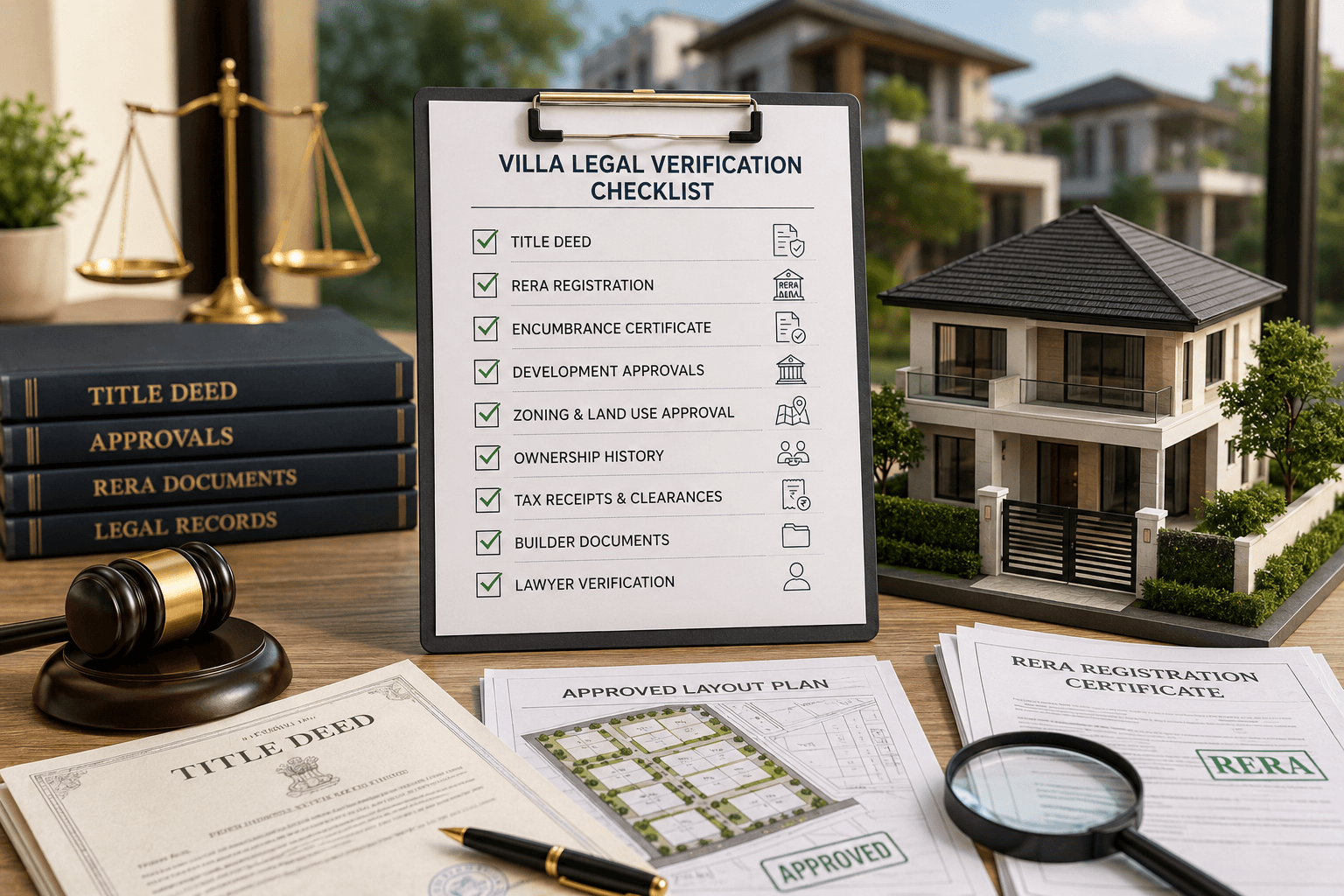
To verify a villa project’s legal documents, check the title deed, RERA registration, encumbrance certificate, development approvals, zoning permissions, and ownership history. Buyers should also confirm that all documents match the project details being advertised and consider obtaining an independent legal review before purchasing.
Key Takeaways
- Verify ownership before evaluating amenities or pricing.
- RERA registration is important but not the only requirement.
- Review the encumbrance certificate to identify legal liabilities.
- Check all development and construction approvals.
- Confirm land use and zoning permissions.
- Consider professional legal review before finalizing the purchase.
Why Legal Verification Matters More Than Amenities
It’s easy to get excited about a clubhouse, landscaped gardens, or premium interiors.
However, none of these features matter if the underlying legal foundation of the project isn’t clear.
Legal verification helps protect you from:
- Ownership disputes
- Unapproved developments
- Delayed registrations
- Loan complications
- Resale difficulties
- Future litigation
Many buyers assume legal problems are rare. In reality, most property-related disputes begin with incomplete due diligence during the buying stage.
Document #1: Verify the Title Deed
The title deed is one of the most important documents you’ll review.
What Is a Title Deed?
A title deed establishes legal ownership of the land on which the villa project is being developed.
It confirms who owns the property and whether the seller has the legal right to transfer ownership.
What Should Buyers Check?
Review:
- Current ownership details
- Chain of ownership history
- Property boundaries
- Survey numbers
- Seller authorization
Warning Signs
Be cautious if:
- Ownership history appears unclear
- Multiple parties claim ownership
- Records contain inconsistencies
- Documentation is incomplete
Clear ownership is the foundation of every safe real estate transaction.
Document #2: Check RERA Registration
The Real Estate (Regulation and Development) Act was introduced to increase transparency in the property market.
Why RERA Matters
RERA requires developers to disclose key project information, including:
- Registration details
- Project timelines
- Approved plans
- Construction progress
Verify Information Independently
Never rely solely on marketing brochures.
Buyers should verify project details directly through the Karnataka RERA portal and ensure that registration information matches the project’s claims.
What RERA Does Not Guarantee
RERA improves transparency, but it does not replace comprehensive legal verification.
Buyers should still review ownership records, approvals, and supporting documentation independently.
Document #3: Review the Encumbrance Certificate
Many first-time buyers hear this term but aren’t sure what it means.
What Is an Encumbrance Certificate?
An encumbrance certificate helps identify whether a property has outstanding legal or financial liabilities attached to it.
This may include:
- Mortgages
- Loans
- Legal claims
- Financial obligations
Why It Matters
A clear encumbrance certificate provides additional confidence that the property can be transferred without unresolved liabilities.
Where Can Buyers Verify Records?
Property registration information can be reviewed through the Karnataka Department of Stamps and Registration and related government records.
Document #4: Verify Development Approvals
Even if the land ownership is clear, buyers must verify that the development itself has received the necessary approvals.
Important Approvals Include
- Layout approvals
- Building plan approvals
- Infrastructure approvals
- Local authority permissions
Why This Matters
Projects lacking required approvals may face delays, penalties, or restrictions that affect buyers later.
Always ask developers to explain which authorities have approved the project and provide supporting documentation.
Document #5: Confirm Land Use and Zoning
Not all land is approved for residential development.
What Is Zoning?
Zoning regulations determine how land can legally be used.
Examples include:
- Residential
- Commercial
- Industrial
- Agricultural
Why Buyers Should Care
Improper zoning can affect:
- Financing
- Registration
- Future development
- Resale opportunities
Always verify that the project complies with applicable residential zoning requirements.
What Does a Legally Transparent Villa Project Look Like?
Legally transparent projects typically share several characteristics.
They provide:
- Clear ownership records
- Accessible documentation
- RERA registration details
- Approval information
- Transparent communication
For example, buyers evaluating RERA-approved villa communities near Whitefield should expect access to registration details, approval information, and documentation that supports the project’s legal status.
A reputable developer should be willing to answer questions and provide relevant documentation when requested.
Why Builder Transparency Matters
Documents are important, but so is the developer behind the project.
A transparent builder typically makes the verification process easier by providing:
- Clear answers
- Consistent documentation
- Project updates
- Access to approval records
When researching developers, review:
- Completed projects
- Delivery timelines
- Customer experiences
- Regulatory compliance history
With more than 15 years of experience in Bangalore villa development, MarkON Homes has completed multiple RERA-approved projects across key growth corridors, giving buyers a track record they can independently evaluate.
Should You Hire a Property Lawyer?
In many cases, yes.
When Legal Review Makes Sense
Professional legal review is particularly valuable when:
- The transaction value is significant
- Documentation appears complex
- Multiple ownership transfers exist
- Buyers are unfamiliar with property law
Cost vs Risk
The cost of legal review is usually small compared to the financial commitment involved in purchasing a villa.
Many experienced buyers view legal review as insurance against avoidable mistakes.
Common Legal Mistakes Buyers Make
Assuming RERA Approval Is Enough
RERA is important, but it should be one part of a broader verification process.
Skipping Document Review
Some buyers rely entirely on verbal assurances rather than reviewing documentation themselves.
Ignoring Ownership History
Ownership disputes often originate from issues that occurred years before the current transaction.
Not Seeking Professional Advice
Complex transactions sometimes require independent legal expertise.
Final Legal Verification Checklist
Before booking a villa, confirm:
- Title deed verified
- Ownership history reviewed
- RERA registration confirmed
- Encumbrance certificate checked
- Development approvals verified
- Zoning compliance confirmed
- Builder reputation researched
- Legal documentation reviewed
- Independent legal advice considered
- All project claims cross-verified
If you’re also evaluating under-construction projects, read What Should You Check Before Buying an Under-Construction Villa in Bangalore? for a complete project evaluation checklist.
Final Verdict
Learning how to verify villa project legal documents isn’t just about avoiding risk—it’s about making a confident purchase decision.
A villa may become your family’s home for decades. Taking the time to verify ownership, approvals, registration details, and legal records helps ensure that your investment is built on a strong foundation.
The most successful property buyers aren’t necessarily experts in real estate law. They’re simply disciplined enough to verify before they commit.
Frequently Asked Questions
What documents should I check before buying a villa?
You should review the title deed, RERA registration details, encumbrance certificate, development approvals, zoning permissions, and ownership history.
Is RERA approval enough?
No. RERA improves transparency, but buyers should still verify ownership, approvals, and legal records independently.
What is an encumbrance certificate?
An encumbrance certificate helps identify whether a property has any legal or financial liabilities attached to it.
How can I verify land ownership?
Ownership can be verified through title documents, registration records, and supporting legal documentation.
Should I hire a lawyer before buying a villa?
For high-value transactions, an independent legal review can help identify potential issues before you commit to the purchase.



Join The Discussion