


Buying a villa is about more than selecting the right location or floor plan. The builder you choose can have a lasting impact on construction quality, project delivery, legal transparency, resale value, and your overall ownership experience.
That’s why many buyers spend weeks researching developers before making a decision. If you’re wondering how to choose a trustworthy villa builder in Bangalore, the answer isn’t found in advertisements or brochures. It comes down to evaluating a few critical factors that reveal how a developer operates in the real world.
The good news is that you don’t need to be a real estate expert to identify a reliable builder. A structured checklist can help you separate long-term developers from short-term marketers.
Quick Answer
How Do You Choose a Trustworthy Villa Builder in Bangalore?
A trustworthy villa builder typically has a strong project delivery history, transparent documentation, RERA-compliant developments, consistent construction quality, and positive homeowner experiences. Buyers should verify completed projects, review legal approvals, visit existing communities, and evaluate how openly the builder communicates throughout the buying process.
Key Takeaways
- Review completed projects before evaluating marketing materials.
- Verify RERA registration and legal transparency.
- Visit existing communities to assess construction quality.
- Look for consistent delivery history, not just years in business.
- Evaluate communication and transparency throughout the buying journey.
- Avoid builders who pressure buyers or withhold information.
Why Choosing the Right Builder Matters
Most villa buyers spend considerable time comparing locations, prices, and amenities.
However, the builder often has a bigger impact on your long-term satisfaction than any individual feature.
A reliable developer influences:
- Construction quality
- Possession timelines
- Legal compliance
- Community planning
- Future resale value
- Maintenance standards
Even a prime location can become a poor investment if the project is poorly executed.
Choosing the right builder helps reduce uncertainty and increases confidence throughout the purchase process.
Check #1: Review the Builder’s Track Record
The first question to ask is simple:
What Has the Builder Already Delivered?
Completed projects provide valuable evidence of how a developer performs in practice.
Look at:
- Number of completed developments
- Years of experience
- Delivery timelines
- Community quality
- Homeowner satisfaction
Experience Matters—But Consistency Matters More
A builder may have been operating for many years, but consistency is what truly matters.
Ask:
- Were projects delivered as promised?
- Did the finished product match expectations?
- Were buyers kept informed throughout construction?
A strong delivery history often indicates stronger operational systems and greater accountability.
Check #2: Visit Completed Projects
One of the most effective ways to evaluate a builder is to visit existing communities.
What Should You Observe?
Pay attention to:
- Construction quality
- Landscaping
- Common area maintenance
- Road quality
- Drainage systems
- Community upkeep
Talk to Existing Homeowners
Residents can often provide insights that aren’t visible during a sales presentation.
Questions to ask:
- Was possession delivered on time?
- Were there unexpected costs?
- How responsive is the developer?
- How has the property performed over time?
Real-world experiences often reveal more than brochures ever can.
Check #3: Verify RERA Compliance
RERA has improved transparency within the Indian real estate market.
Why RERA Matters
A registered project provides access to important information regarding:
- Project approvals
- Construction progress
- Delivery timelines
- Developer commitments
Verify Independently
Before trusting any claim, verify project information through the Karnataka RERA portal.
This helps ensure the details being presented align with official records.
Remember: RERA Is a Starting Point
While RERA is important, it should be viewed as one element of a broader evaluation process rather than a complete trust guarantee.
Check #4: Evaluate Construction Quality
Construction quality directly affects comfort, maintenance costs, and long-term value.
Look Beyond Surface Finishes
Premium flooring and attractive interiors are important, but buyers should also evaluate:
- Structural materials
- Ventilation systems
- Waterproofing measures
- Plumbing infrastructure
- Electrical systems
Sustainable Construction Matters
Modern villa buyers increasingly value sustainability because it can improve both comfort and operating efficiency.
Features such as:
- Solar energy systems
- Rainwater harvesting
- Natural cooling strategies
- Energy-efficient materials
can contribute to a better living experience over the long term.
Check #5: Look for Transparency
Trustworthy builders tend to share information openly.
Documentation Transparency
Ask whether the developer can provide:
- Approval details
- RERA information
- Project specifications
- Construction timelines
Pricing Transparency
Request a complete breakdown of costs, including:
- Base price
- Registration charges
- Maintenance deposits
- Applicable taxes
Communication Quality
A transparent developer typically answers questions clearly rather than avoiding specifics.
How a builder communicates before the sale often reflects how they will communicate afterward.
What Does a Trustworthy Villa Project Look Like?
While every buyer has different priorities, reliable villa developments usually share several common characteristics.
They often provide:
- Clear legal documentation
- Transparent approvals
- Well-planned communities
- Sustainable construction practices
- Realistic delivery timelines
For example, buyers evaluating RERA-approved villa communities in the Whitefield growth corridor often look for factors such as legal transparency, construction quality, sustainability features, and long-term location potential before making a decision.
The key is not finding a project with the biggest marketing campaign—it’s finding one backed by solid fundamentals.
Check #6: Evaluate Customer Experience
A builder’s relationship with homeowners doesn’t end when the villa is handed over.
Assess Service Responsiveness
Consider:
- How quickly questions are answered
- Whether commitments are documented
- How issues are resolved
Look for Consistency
Satisfied homeowners often indicate:
- Better project management
- Better communication
- Stronger customer support
Research Independent Feedback
When researching developers, explore multiple sources rather than relying solely on testimonials provided by the builder.
According to reporting from Financial Express Real Estate, transparency and execution quality continue to be key factors influencing buyer confidence in India’s residential property market.
Check #7: Review the Builder’s Development Philosophy
Not all builders approach villa development the same way.
Some focus primarily on volume.
Others focus on creating smaller, lower-density communities with greater attention to design and livability.
Boutique vs Large-Scale Development
Many luxury villa buyers prefer boutique communities because they often offer:
- Lower density
- Greater privacy
- More open space
- Stronger community feel
Builders with a clear long-term vision typically create developments that remain attractive years after possession.
With over 15 years of experience developing boutique villa communities across Bangalore’s major growth corridors, MarkON Homes has focused on independent villa living, sustainability, and long-term community value rather than high-density residential development.
Common Red Flags to Avoid
While evaluating builders, watch for warning signs.
Unrealistic Promises
Be cautious when timelines, appreciation claims, or pricing appear too good to be true.
Lack of Documentation
A trustworthy builder should be willing to provide relevant project information.
Pressure-Selling Tactics
Buyers should never feel rushed into making a decision without proper verification.
No Completed Projects
Past performance remains one of the strongest indicators of future execution.
Poor Communication
Delayed responses and vague answers often signal deeper operational issues.
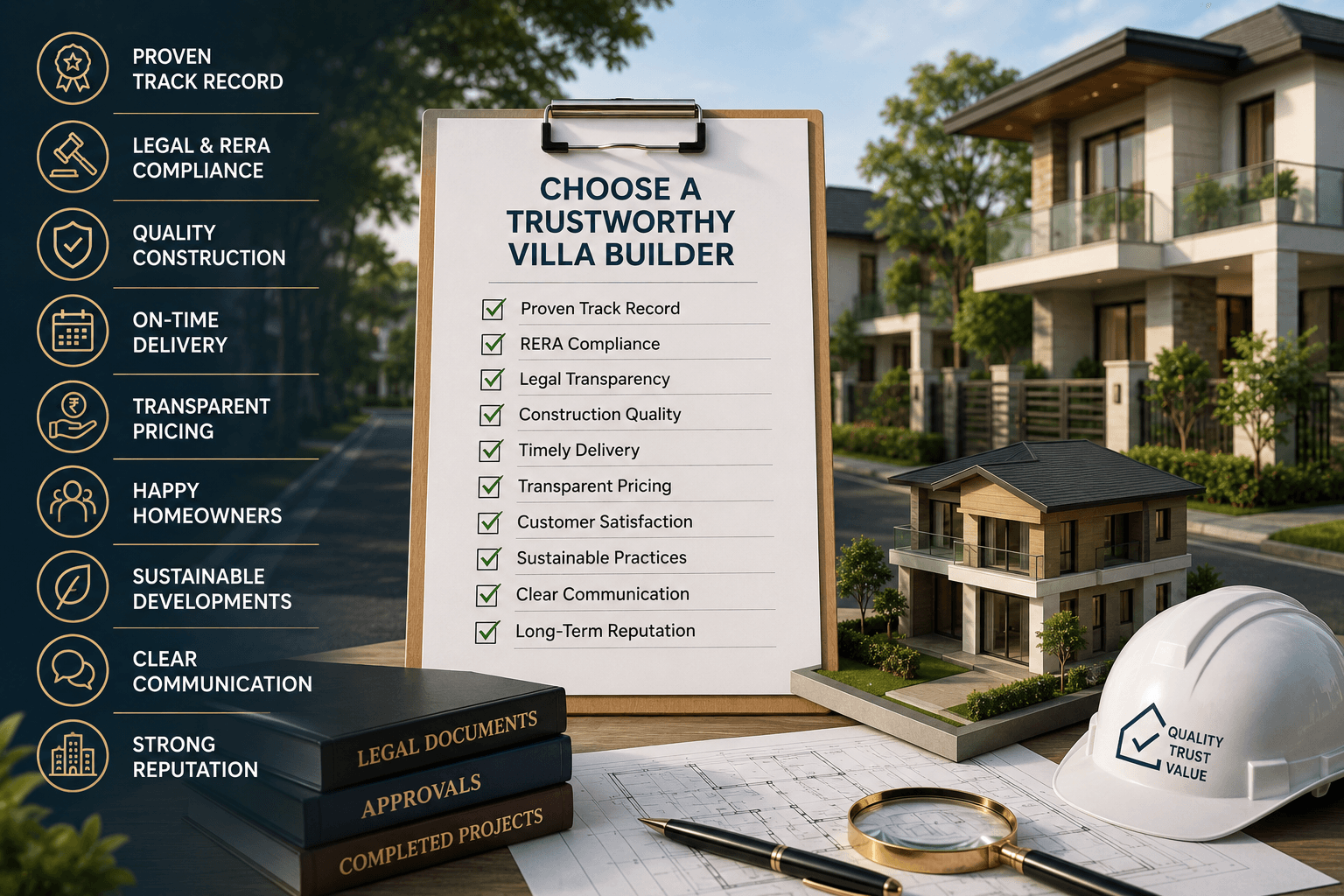
Final Builder Evaluation Checklist
Before selecting a villa developer, confirm the following:
- Completed projects reviewed
- Existing communities visited
- RERA compliance verified
- Legal documentation reviewed
- Construction quality assessed
- Pricing transparency confirmed
- Communication quality evaluated
- Customer feedback researched
- Long-term reputation assessed
- Overall trust level established
For additional due diligence, read How to Verify a Villa Project’s Legal Documents Before You Buy and What Should You Check Before Buying an Under-Construction Villa in Bangalore? before making your final decision.
Final Verdict
If you’re trying to determine how to choose a trustworthy villa builder in Bangalore, focus on evidence rather than marketing.
Completed projects, legal transparency, construction quality, customer experience, and communication standards provide a far more accurate picture of a developer than promotional claims alone.
A villa is a long-term investment. Taking the time to evaluate the builder thoroughly can help ensure that your future home is backed by quality, accountability, and lasting value.
Frequently Asked Questions
How do I know if a villa builder is trustworthy?
Look for a strong delivery history, completed projects, transparent documentation, RERA compliance, and positive homeowner experiences.
Is RERA approval enough?
No. RERA is important, but buyers should also evaluate construction quality, legal documentation, and builder reputation.
Should I visit completed projects before buying?
Yes. Visiting completed communities provides valuable insight into quality, maintenance standards, and long-term project performance.
How important is builder experience?
Experience matters, but consistency in delivering quality projects is even more important.
What are the biggest warning signs when evaluating builders?
Common red flags include missing documentation, unrealistic promises, poor communication, high-pressure sales tactics, and a lack of completed projects.




Join The Discussion